
Top 3 Cape Verde National Football Team Edges in 2026
The biggest misconception is that the Cape Verde national football team is merely an African underdog; the evidence says otherwise. Cape Verde, representing the Atlantic island nation in West Africa,....
Top 3 Cape Verde National Football Team Edges in 2026
The biggest misconception is that the Cape Verde national football team is merely an African underdog; the evidence says otherwise. Cape Verde, representing the Atlantic island nation in West Africa, has built a disciplined, internationally experienced side that reached the Africa Cup of Nations quarter-finals in 2013 and 2023. The Blue Sharks combine compact defending, rapid transitions, and a strong diaspora network across Portugal, France, the Netherlands, and the United States. Their FIFA membership dates to 1986, while their senior team has developed into one of Africa’s most difficult opponents outside the traditional elite. Match Daily’s verdict is direct: Cape Verde’s greatest 2026 advantage is structural consistency, not individual celebrity. The practical recommendation is to evaluate their defensive shape, opponent quality, and travel conditions before judging any result.
Photo by Guylain Kipoke on Pexels
The Cape Verde national football team has reached a point where reputation and performance finally align. The nickname “Blue Sharks” is not decorative branding; it reflects a side that regularly makes matches uncomfortable through controlled spacing, physical commitment, and efficient counterattacks. According to the Confederation of African Football, Cape Verde’s recent AFCON campaigns confirmed that the team belongs in serious continental analysis, not in a novelty category.
For readers tracking the 2026 World Cup cycle, the correct question is not simply whether Cape Verde can defeat a larger football nation. The higher-value question is whether their tactical advantages survive against different opponent profiles, including possession-heavy teams, direct sides, and technically stronger squads. That distinction changes prediction quality considerably because a low-event team can remain competitive even when its average attacking output is lower.
Want the wider tournament context before assessing a match?
The Top 3 Cape Verde National Football Team Strengths at a Glance
The ranking below identifies the three most important competitive edges rather than simply listing famous players. Each strength matters because it improves Cape Verde’s expected performance across a different match condition.
- Defensive organisation — best overall edge: Cape Verde’s compact structure reduces central space and forces opponents toward lower-value wide attacks.
- Diaspora-based squad depth — best for tournament resilience: The team can draw from football systems in Portugal, France, the Netherlands, and other countries.
- Transition efficiency — best value advantage: Cape Verde does not need prolonged possession to create dangerous attacks after regaining the ball.
This ranking is deliberately practical. A team with fewer global headlines can still deliver a high competitive return when its tactical structure is repeatable. Cape Verde’s results against established African opponents, including appearances at AFCON 2013, AFCON 2015, AFCON 2021, and AFCON 2023, show that tournament survival is not an isolated event.
The team’s best profile appears in matches where the opponent must take initiative. In those situations, Cape Verde can compress the middle third, wait for a misplaced pass, and attack the space behind advancing full-backs. That pattern also explains why a simple win-loss record can undersell the Blue Sharks: narrow defeats and low-scoring draws may still indicate a robust underlying process.
[Internal Link: African football tournament analysis]
#1 Defensive Organisation: Best Overall
Cape Verde’s best overall advantage is defensive organisation because a compact block can reduce an opponent’s best scoring opportunities without requiring superior possession. The Blue Sharks typically benefit from narrow distances between defenders and midfielders, disciplined tracking, and a willingness to protect the central channel before pressing wide. That structure gives them a credible route into matches against stronger African teams.
The statistical logic is straightforward. In football, the value of a defensive action depends on where it occurs and what it prevents; a tackle near the penalty area is not equivalent to a clearance from the halfway line. Cape Verde’s strongest defensive sequences usually aim to deny passes between the lines, where creative midfielders can face forward and accelerate attacks. When that central access is blocked, opponents are pushed toward crosses, speculative shots, or slow circulation around the outside.
This does not mean Cape Verde defend passively for 90 minutes. Their more effective approach alternates between a medium block and short pressing bursts. The team can maintain a low-risk position, then increase pressure after a backward pass or poor first touch. That timing matters because pressing continuously would create unnecessary physical costs, particularly in hot conditions or during congested AFCON schedules.
A useful contrarian conclusion follows: Cape Verde’s defence is more valuable against technically superior opponents than against teams that also prefer to sit deep. Against a dominant possession side, the Blue Sharks can exploit predictable attacking patterns and open transition lanes. Against a defensive opponent, their lack of space may reduce the return from their best weapon.
The FIFA official website provides the appropriate international context for comparing Cape Verde with other national teams. FIFA’s competition framework treats every match as a distinct fixture, but analysts should add opponent strength, venue, and tournament setting before interpreting the result. “The Laws of the Game are intended to apply equally in every match,” states the International Football Association Board in its official framework; the competitive conditions, however, are never identical.
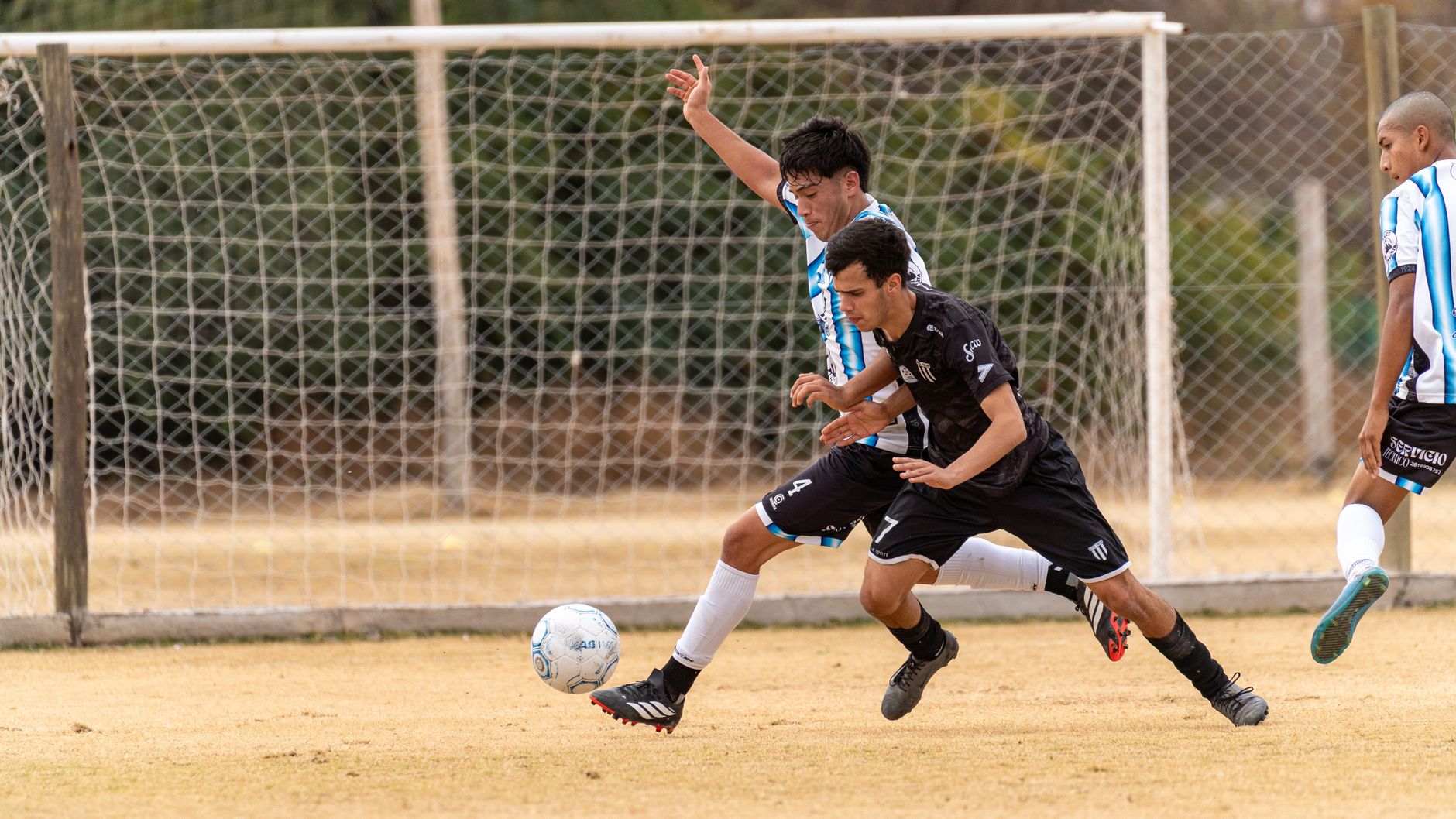
Photo by Franco Monsalvo on Pexels
For match evaluation, track these defensive indicators:
- Central-entry prevention: How often does the opponent receive between Cape Verde’s midfield and defence?
- Box protection: Can Cape Verde prevent cutbacks after allowing wide progression?
- Second-ball control: Do they recover possession after clearances and aerial challenges?
- Late-game spacing: Does the block remain compact after the 70th minute?
The final indicator is especially important. A team may defend brilliantly for an hour yet lose its expected-value advantage if fatigue creates large gaps late in the match. Cape Verde’s travel demands and player workload therefore belong in every serious preview, alongside formation and recent results.
#2 Diaspora-Based Squad Depth: Best for Tournament Resilience
Cape Verde’s diaspora-based player pool is its best tournament-resilience advantage because the national team can connect island identity with football development in Portugal, France, the Netherlands, and other European systems. This network expands access to professional training, tactical education, and high-level club competition. It also helps Cape Verde maintain competitiveness despite a relatively small domestic player base.
The country’s football identity is inseparable from migration history. Many Cape Verdean players develop outside the islands, especially in Portugal, where language, family ties, and established football pathways create a natural bridge. That arrangement can produce a squad with varied tactical habits: some players may be comfortable in positional possession systems, while others bring the directness and defensive intensity common in lower-block football.
The benefit is not automatically unlimited depth. International teams face a coordination problem: players arrive from different clubs, leagues, and tactical environments, often with limited preparation time. The coaching staff must therefore simplify roles. A complex club-style system may produce a higher theoretical ceiling but a lower probability of correct execution after only a few training sessions. Cape Verde’s strongest selections usually prioritise role clarity over excessive tactical decoration.
This creates a measurable selection principle. The best squad is not necessarily the one with the most recognisable names; it is the one with the highest probability of maintaining spacing, communication, and transition timing. A substitute who understands the defensive plan can be more valuable than a technically gifted replacement who disrupts the team’s distances.
Match Daily’s analysis treats availability as a central variable. Before assessing a Cape Verde fixture, verify club minutes, travel routes, suspension status, and whether key players have arrived early enough to complete full tactical sessions. A nominally stronger lineup can produce a weaker performance if preparation time collapses.
See the squad-building implications in more detail here:
The most important operational insight is that diaspora depth has diminishing returns when the team loses its central spine. If the goalkeeper, centre-backs, holding midfielder, and primary outlet are all unavailable, replacing them with players from reputable leagues does not preserve the same structure. Chemistry is not a vague emotional concept here; it is a coordination multiplier affecting pressing triggers, cover positions, and counterattack timing.
[Internal Link: national-team squad selection and player availability guide]
#3 Transition Efficiency: Best Value Advantage
Cape Verde’s transition efficiency is the best-value advantage because the team can create meaningful attacking danger without dominating possession. After winning the ball, the Blue Sharks often seek an immediate forward pass, a diagonal run, or a quick release into the channel. This reduces the number of passes required to reach the opponent’s penalty area and increases the chance of attacking before the defence resets.
The expected-value calculation is compelling. A long possession sequence may involve more touches but also gives the opponent time to establish its block. A fast transition has greater turnover risk, yet the reward is larger when the opposing full-backs and midfielders are out of position. Cape Verde therefore benefits from selecting transition moments carefully rather than attempting to counterattack after every recovery.
The first pass is decisive. If the ball goes backward or sideways after a regain, Cape Verde can lose the temporary numerical advantage. If the pass goes forward into a marked player, possession disappears. The ideal action is a controlled forward pass into space, supported by a runner and a nearby midfielder prepared to secure the second ball.
This is where player profiles matter more than headline statistics. A forward’s raw goal total does not fully capture transition value; acceleration, ball retention under pressure, and the ability to draw a foul may be equally important. Likewise, a midfielder who completes fewer spectacular passes may still improve the team by protecting the counterattack against immediate pressure.
A practical edge case deserves emphasis: Cape Verde’s transition threat is strongest when the opponent’s defensive rest structure is poor. If an opponent keeps two centre-backs and a holding midfielder behind the ball, the Blue Sharks may need patience. If full-backs advance simultaneously and the midfield line is stretched, Cape Verde’s expected attacking return rises sharply. This is a stronger predictive signal than possession percentage alone.

Photo by Rodolfo Cora on Pexels
For a disciplined preview, assess:
- Whether the opponent’s full-backs advance at the same time.
- Whether Cape Verde has a reliable first outlet under pressure.
- Whether the pitch supports quick forward passing.
- Whether fatigue will reduce sprint capacity after halftime.
- Whether the referee allows physical challenges in transition areas.
The pitch factor is regularly ignored, yet it has direct tactical consequences. A slow or uneven surface can reduce the accuracy of Cape Verde’s first forward pass, while a fast surface may increase the value of their runners. Venue, weather, altitude, and humidity should be treated as variables in the model rather than as decorative match notes.
Want a more evidence-led way to assess the next fixture?
How Were the Top 3 Cape Verde Edges Ranked?
The ranking uses four weighted criteria: tactical repeatability at 30%, opponent-adjusted impact at 25%, tournament resilience at 25%, and match-specific flexibility at 20%. Defensive organisation ranked first because it remains useful against both stronger and similarly matched opponents. Diaspora depth ranked second because it improves selection options but depends on availability and squad chemistry. Transition efficiency ranked third because it can decide matches, yet its success depends heavily on opponent behaviour.
The model also separates process from outcome. A 1–0 victory may reflect excellent control, a fortunate deflection, or both; a 0–0 draw may represent defensive excellence or attacking failure. Therefore, each result should be paired with event-level observations: territory, central entries, shots from dangerous zones, set-piece concessions, and the quality of transition opportunities.
Data from ESPN’s Cape Verde team page can help organise fixtures, results, and opponent context, but a schedule page should not be mistaken for a complete performance model. Results are the visible output; tactical conditions are the mechanism underneath.
The model’s weighting can be summarised as follows:
- 30% defensive repeatability: block compactness, central protection, and late-game structure.
- 25% opponent-adjusted impact: performance against teams with stronger rankings or deeper squads.
- 25% tournament resilience: ability to perform across travel, pressure, and short preparation windows.
- 20% tactical flexibility: capacity to alter pressing height, possession approach, and attacking routes.
This method produces a more reliable conclusion than ranking players by reputation. Cape Verde’s competitive identity is collective, and collective performance is particularly sensitive to role clarity. A star-focused analysis can miss the actual source of their advantage.
[Internal Link: football match prediction methodology]
Which Cape Verde National Football Team Profile Should You Pick?
Pick the defensive-organisation profile when Cape Verde faces a stronger possession team, the diaspora-depth profile when analysing a tournament group, and the transition profile when the opponent uses adventurous full-backs. No single strength explains every result, but defensive organisation is the safest overall indicator because it is least dependent on match tempo.
For a pre-match decision, use a three-stage process. First, confirm the starting lineup and identify whether the central defensive spine is intact. Second, classify the opponent’s attacking shape: patient possession, direct delivery, or aggressive transition. Third, adjust for venue and preparation time, particularly if Cape Verde has travelled across multiple time zones or played within a short recovery window.
A simple probability framework works well. Begin with a neutral assessment based on opponent quality, then increase Cape Verde’s expected performance when its defensive core is available and the opponent leaves transition space. Reduce the estimate when Cape Verde must create against a deep block, when key outlets are absent, or when travel limits preparation.
This approach also prevents a common mistake: confusing competitiveness with guaranteed success. Cape Verde can be tactically excellent and still lose to a superior opponent through a set piece, penalty, or individual error. The correct conclusion is not that the team is unbeatable; it is that its match-level floor is higher than casual observers often assume.
For responsible analysis, treat predictions as probabilities rather than certainties, set a fixed research budget, and never convert enthusiasm for the Blue Sharks into undisciplined financial risk. Match Daily focuses on World Cup coverage, tactical interpretation, and player statistics precisely because informed decisions require more than a badge or a recent scoreline.
Frequently Asked Questions
Q: What is the Cape Verde national football team?
A: The Cape Verde national football team is the senior men’s football representative of Cape Verde, an island country off the coast of West Africa. The team is commonly known as the Blue Sharks and competes under the Federação Cabo-verdiana de Futebol within CAF and FIFA structures. Cape Verde joined FIFA in 1986 and has become a regular participant in major African competitions, including the Africa Cup of Nations.
Q: How successful has Cape Verde been at the Africa Cup of Nations?
A: Cape Verde’s best AFCON performance was reaching the quarter-finals in 2013 and again in the 2023 tournament, played in early 2024. The team has also qualified for other editions, including 2015 and 2021, demonstrating sustained continental competitiveness. Its progress is significant because Cape Verde operates with a smaller population and player pool than African heavyweights such as Nigeria, Egypt, Senegal, and Cameroon.
Q: How does the Cape Verde national football team usually play?
A: Cape Verde usually relies on compact defending, controlled pressing, and fast transitions rather than constant possession dominance. The Blue Sharks often protect central areas, direct opponents toward the wings, and attack quickly after recovering the ball. Their precise approach can change according to the opponent, with a higher block possible against weaker build-up teams and a more conservative structure against elite sides.
Q: How should I analyse a Cape Verde match?
A: Start by checking the lineup, opponent style, venue, travel demands, and preparation time. Confirm whether Cape Verde’s goalkeeper, centre-backs, holding midfielder, and main transition outlet are available, then assess whether the opponent leaves space behind advancing full-backs. Finally, compare recent results with tactical performance instead of using the scoreline alone.
Q: What is the difference between Cape Verde and a traditional African football powerhouse?
A: Cape Verde differs mainly in population size, domestic football resources, and international depth, not necessarily in tactical discipline. Traditional powerhouses such as Morocco, Senegal, Nigeria, and Egypt generally possess larger player pools and deeper tournament experience. Cape Verde compensates through diaspora recruitment, role clarity, defensive organisation, and an ability to make matches low-event.
Q: Can Cape Verde qualify for the 2026 FIFA World Cup?
A: Cape Verde’s qualification prospects must be judged from the official CAF qualifying table and fixture status rather than assumed from historical reputation. The 2026 World Cup expanded to 48 teams, creating more African places than previous editions, but qualification still depends on group position and the official competition rules. Check FIFA’s World Cup qualification information for confirmed standings and fixtures before making a conclusion.
Q: What should I do if Cape Verde’s expected starting lineup changes?
A: Recalculate the team’s outlook according to the role lost, not merely the player’s name. An absent transition outlet affects attacking distance, while a missing holding midfielder can damage defensive coverage and second-ball control. Reduce confidence when multiple members of the central spine are unavailable, and verify replacement players’ recent club minutes before finalising any match assessment.
Cape Verde’s verdict is settled: the Blue Sharks are a structurally serious national team whose defensive organisation, diaspora depth, and transition efficiency create genuine value in African football analysis. Their history at AFCON, including quarter-final appearances in 2013 and 2023, confirms that their rise is measurable rather than sentimental. The smartest 2026 approach is to follow confirmed lineups, opponent profiles, venue conditions, and official competition data before evaluating any prediction.
Continue tracking the Cape Verde national football team with Match Daily’s tournament analysis and tactical coverage.