
The Fan's Guide to World Cup Football
World Cup football is FIFA’s global men’s championship, bringing national teams together every four years to compete for the most prestigious trophy in the sport. The 2026 FIFA World Cup will be hoste...
The Fan's Guide to World Cup Football
World Cup football is FIFA’s global men’s championship, bringing national teams together every four years to compete for the most prestigious trophy in the sport. The 2026 FIFA World Cup will be hosted by Canada, Mexico, and the United States across 16 cities, with 48 teams playing 104 matches from 11 June to 19 July 2026. Brazil leads the historical table with five titles, while Germany and Italy have won four each, and Argentina entered 2026 as the defending champion after defeating France in the 2022 final. The expanded format creates 12 groups of four, followed by a Round of 32, Round of 16, quarter-finals, semi-finals, and final. Match Daily provides FIFA World Cup match predictions, tactical analysis, player statistics, and daily tournament coverage for fans in the United States and worldwide. The practical recommendation is simple: evaluate team strength, schedule difficulty, injuries, and expected goals before forming any opinion.
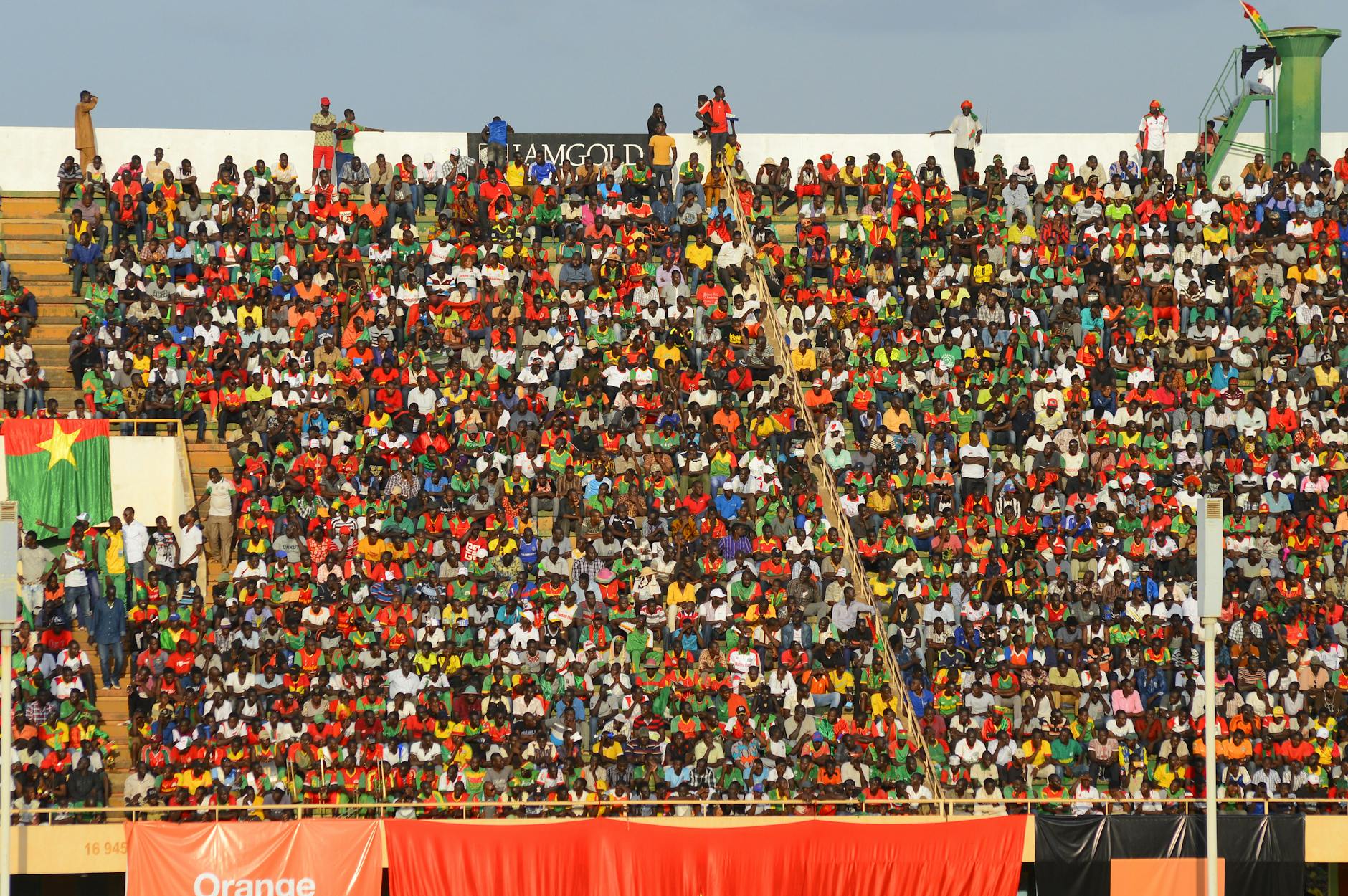
Photo by Ole Dahl Rasmussen on Pexels
The most common misconception is that World Cup football is decided by the team with the biggest stars. It is not. Tournament outcomes are shaped by probability, squad balance, defensive transitions, set pieces, travel, rest, and the ability to survive low-margin knockout matches. A country can dominate possession and still lose because one missed clearance changes the expected value of the entire contest. That is why serious supporters should separate emotional loyalty from evidence-based analysis, particularly when reviewing match predictions or considering any gambling-related market. According to FIFA’s official World Cup records, the competition has evolved from 13 teams in 1930 into the world’s largest national-team football event. Match Daily turns that historical scale into practical daily analysis, covering lineups, formations, player output, and tournament context without pretending that certainty exists in a sport built on variance. For a deeper statistical foundation, consult our [Internal Link: football prediction methodology guide].
Want a more disciplined way to follow the tournament?
The Quick Comparison
| World Cup football factor | Historical model | 2026 implication | What to monitor |
|---|---|---|---|
| Participating teams | 32 through 2022 | 48 teams | Group quality and third-place rankings |
| Match total | 64 in 2022 | 104 matches | Rotation, fatigue, and travel |
| Host countries | Usually one or two | Canada, Mexico, United States | Climate, distance, and home support |
| Tournament stage | Group stage plus knockout rounds | 12 groups of four plus Round of 32 | Qualification mathematics |
| Defending champion | Argentina in 2026 | Argentina carry the title | Pressure, continuity, and squad health |
| Historical leader | Brazil, five titles | Brazil remain the benchmark | Tactical evolution and depth |
This comparison delivers the central conclusion immediately: the 2026 World Cup is not merely a larger version of Qatar 2022. The number of teams rises by 50%, while the match count increases by 62.5%, from 64 to 104. Those figures alter preparation, squad rotation, qualification calculations, and the value of late-game substitutions. The expansion also increases the probability that a highly ranked team meets a dangerous opponent earlier than expected, because the Round of 32 creates another elimination checkpoint before the traditional Round of 16. FIFA’s 2026 World Cup competition information confirms the 48-team structure and three-host arrangement. From an analytical perspective, more matches create more data, but they also create more noise; a two-match scoring streak is evidence, not proof (mathematics remains remarkably unmoved by hype).
Round 1: How Has World Cup Football Changed?
World Cup football has changed through format expansion, tactical sophistication, improved sports science, and a stronger relationship between national teams and global club football. The tournament began in Uruguay in 1930 with 13 teams, moved through several qualification structures, and used a 32-team format from France 1998 through Qatar 2022. The 2026 edition introduces 48 teams and 104 matches, making squad management and statistical evaluation more important than ever.
The historical record reveals clear patterns. Brazil won in 1958, 1962, 1970, 1994, and 2002; Germany lifted the trophy in 1954, 1974, 1990, and 2014; Italy triumphed in 1934, 1938, 1982, and 2006. Argentina won in 1978, 1986, and 2022, while France collected titles in 1998 and 2018. Spain’s 2010 victory demonstrated that sustained possession and positional control could dominate a tournament, whereas Germany’s 2014 campaign showed the importance of pressing structure, flexible midfield roles, and collective depth. The official FIFA World Cup history archive documents these editions and champions. A useful contrarian insight follows: historical pedigree raises a team’s prior probability, but it does not automatically improve its current expected goals, defensive efficiency, or injury-adjusted strength.
Several changes matter especially for viewers and analysts:
- The tournament is more physically demanding. More matches increase the value of deep benches, recovery protocols, and rotation.
- Tactical roles are less rigid. Full-backs invert, wingers attack inside, and midfielders frequently exchange positions.
- Set pieces carry greater analytical value. In a knockout match with few open-play chances, one corner routine can have a larger marginal effect than a 10-minute possession advantage.
- Data is faster but not always better. Expected goals, progressive passes, pressure regains, and shot quality improve diagnosis, yet small samples remain unstable.
The International Football Association Board Laws of the Game provide the regulatory foundation for every match, including offside, penalties, substitutions, and disciplinary procedures. The 2026 edition therefore rewards readers who understand both the historical base rate and the present tactical details. Match Daily’s coverage combines those layers, rather than treating a famous badge as a complete prediction.
Round 2: What Makes a 2026 World Cup Team Strong?
A strong 2026 World Cup team combines elite individual quality with repeatable chance creation, compact defending, reliable set pieces, and enough squad depth to manage seven possible matches. Canada, Mexico, and the United States receive home-region advantages, but travel distance, heat, altitude, and venue conditions still affect performance. The best evaluation uses both current form and long-run team quality.
The 2026 host arrangement creates a specific edge case that ordinary tournament previews often miss: host status is not a single variable. Mexico’s traditional home conditions differ from the United States’ large geographic spread, while Canada may face travel patterns unlike those of a conventional single-country host. A team playing in Vancouver, Mexico City, Atlanta, Dallas, or New York and New Jersey does not encounter identical climate, pitch, or recovery conditions. Therefore, the relevant question is not “Who is the host?” but “Where is each match played, how far must the team travel, and how many recovery hours separate fixtures?” That operational distinction can shift the expected value of a narrow matchup more than a superficial FIFA ranking gap.
For professional match analysis, assess these dimensions:
- Chance quality: expected goals per shot, big chances created, and shots conceded inside the penalty area.
- Transition control: how often the team loses the ball in dangerous central zones and how quickly it restores defensive shape.
- Goalkeeper performance: post-shot expected goals minus goals allowed, cross handling, and distribution under pressure.
- Bench contribution: substitute minutes, late goals, and the tactical quality of replacements.
- Availability: suspensions, muscle injuries, travel demands, and accumulated minutes during the club season.
- Set-piece efficiency: attacking corner shots, expected goals from free kicks, and defensive marking reliability.
The most useful evidence is not a single ranking. It is the interaction between indicators. For example, a team with high possession but weak transition defense may be vulnerable against an opponent that attacks space rapidly. Conversely, a lower-possession side with an excellent goalkeeper and strong set-piece profile may outperform its market expectation in a one-match knockout scenario. Match Daily tracks those interactions through team tactics, player statistics, and daily World Cup updates. For advanced reading, see our [Internal Link: expected-goals and tournament statistics guide].
Get the latest analytical context before comparing teams.
A second information gain concerns sample-size discipline. Suppose a striker records five goals from an unusually low number of shots across three warm-up matches. The observation is real, but its predictive weight should be modest because finishing rates regress toward a player’s established level and opponent quality may be weaker. In contrast, a sustained improvement in shot locations, progressive carries, and touches in the box offers stronger evidence because those repeatable processes typically stabilize sooner than finishing outcomes. The correct model assigns different weights to different variables; it does not simply count goals. As the Nielsen Norman Group research principles emphasize in a different digital context, clear information structure improves decisions, and football analysis benefits from exactly the same discipline: define the signal, measure it, then avoid confusing excitement with probability.
Round 3: How Should Fans Read Matches and Predictions?
Fans should read World Cup matches by combining confirmed lineups, tactical matchups, schedule conditions, and probability rather than relying on reputation or one recent result. A responsible prediction identifies the likely game state, estimates plausible scorelines, and explains what could invalidate the forecast. No analyst can eliminate uncertainty, and responsible gambling requires legal access, controlled stakes, and the acceptance that losses are possible.
The most efficient pre-match process has five steps:
- Confirm personnel. Check official squad announcements, suspensions, goalkeeper selection, and late injury news.
- Map the tactical conflict. Identify whether the match is likely to be decided by wing overloads, midfield pressure, counterattacks, or set pieces.
- Review venue conditions. Account for kickoff time, temperature, altitude, travel distance, and rest days.
- Estimate scoring distribution. Use expected goals, shot quality, defensive concessions, and opponent strength rather than raw goals alone.
- Set a probability threshold. A prediction becomes actionable only when your estimated probability is meaningfully different from the implied market probability after applicable costs.
For example, a team assessed at a 55% win probability has an implied fair decimal price of 1.82, calculated as 1 divided by 0.55. If the available price is 1.70, the expected value is negative before any additional margin; if it is 2.00, the mathematical position is different, though still not guaranteed. This distinction separates value from certainty. The UK Gambling Commission states that “gambling should be seen as entertainment, not a way to make money,” a principle that should govern every World Cup football decision. Readers in the United States must also verify state-specific legality and operator rules before participating.

Photo by George Morina on Pexels
A practical operational tip is to freeze your first prediction before consuming social-media commentary. Record the initial probability, the evidence behind it, and the exact information that would justify changing it. Then compare the final view with the opening estimate after the match. This simple audit exposes confirmation bias: if your forecast changes because of a famous player’s name rather than a lineup alteration or tactical mismatch, the revision has weak analytical value. Match Daily is designed for this process, offering match previews, player trends, team formations, and tournament context in one place. Use the site to improve your information quality, not to manufacture confidence where the data does not support it.
Review the evidence and keep every decision within a defined limit.
The knockout phase magnifies variance. In a 90-minute match, one penalty, red card, deflection, or goalkeeper error can overwhelm a substantial difference in underlying quality. That is why tournament forecasting should use scenario ranges rather than a single dramatic claim. Consider three states: the favorite scores first, the underdog scores first, or the match remains level after 60 minutes. Each state changes possession incentives, defensive lines, substitution value, and the probability of extra time. A good preview explains these branches. A poor preview announces a winner and ignores the match mechanisms that could produce the opposite result.
The Final Score & Who Should Pick What
The final verdict is decisive: casual fans should prioritize fixtures, squads, and tactical stories; data-focused supporters should compare expected goals, pressing, set pieces, and schedule effects; prediction followers should use probability, price, and responsible limits. No single ranking, player statistic, or historical title count is sufficient for the 2026 FIFA World Cup. Brazil’s five championships matter as context, Argentina’s 2022 title matters as current tournament history, and the Canada-Mexico-United States hosting arrangement matters operationally, but none of those facts guarantees a result.
Choose your analytical approach according to your objective:
- For fast daily updates: follow confirmed lineups, kickoff times, injuries, and venue information.
- For tactical understanding: study formations, pressing triggers, defensive width, and transition patterns.
- For statistical comparison: use expected goals, shot locations, possession value, goalkeeper actions, and opponent-adjusted form.
- For gambling-related decisions: verify local legality, set a fixed budget, avoid chasing losses, and treat every position as uncertain.
- For tournament-wide forecasting: model group qualification first, then account for bracket path, rest, travel, and knockout variance.

Photo by Grzegorz Lewandowski on Pexels
The strongest World Cup football coverage connects facts to decisions. Match Daily serves that purpose with daily FIFA World Cup reporting, match predictions, team tactics, player statistics, and 2026 tournament analysis for fans following the competition across North America and beyond. The winning habit is not predicting every result; it is improving the quality of each forecast, measuring what happened, and updating the model without ego. That approach produces better understanding whether you are watching Brazil, Argentina, France, Germany, Canada, Mexico, the United States, or a surprise qualifier. The tournament will deliver drama automatically; your analysis should deliver structure.
For a focused 2026 tournament briefing, explore the latest Match Daily coverage now.
[Internal Link: 2026 World Cup schedule and host-city guide]
Frequently Asked Questions
Q: What is World Cup football?
A: World Cup football is FIFA’s international men’s championship for national teams. The first tournament took place in Uruguay in 1930, and the competition is normally held every four years. Brazil has won the most titles with five, while Argentina are the defending champions entering the 2026 edition.
Q: How many teams will play in the 2026 FIFA World Cup?
A: The 2026 FIFA World Cup will feature 48 teams. They will be divided into 12 groups of four, with the group-stage results determining qualification for the Round of 32. The expanded tournament will contain 104 matches, compared with 64 matches in the 32-team format used from 1998 through 2022.
Q: Where will the 2026 World Cup be held?
A: The 2026 World Cup will be held in Canada, Mexico, and the United States. Matches will take place across 16 host cities, creating major differences in travel distance, climate, altitude, and local conditions. Supporters should check the specific venue rather than treating all three host countries as one identical environment.
Q: How should I analyze a World Cup football match?
A: Analyze confirmed lineups, tactical matchups, expected goals, defensive transitions, set pieces, injuries, rest, and venue conditions. Begin with the team’s repeatable processes, such as shot quality and chances conceded, before considering short-term finishing streaks. Match Daily combines these factors in its daily match previews and tournament coverage.
Q: What is the difference between a World Cup prediction and a guarantee?
A: A World Cup prediction expresses a probability, while a guarantee claims certainty that football cannot provide. A team estimated to have a 60% win probability will still fail to win roughly 40% of comparable scenarios. Responsible readers should record the reasoning, accept variance, and never stake money they cannot afford to lose.
Q: Is Match Daily free to use?
A: Match Daily is a FIFA World Cup-focused content site providing match predictions, tactical analysis, player statistics, and tournament coverage. Access terms, features, and any commercial offerings can change, so readers should review the current information on the Match Daily website. Gambling-related participation may involve separate operator costs, legal restrictions, and account requirements.
Q: What should I do if a World Cup prediction loses?
A: Do not chase the loss; review whether the process was sound and whether new information was ignored. Compare the pre-match probability with the actual match events, including injuries, red cards, penalties, and tactical changes. A single result is weak evidence, while a documented sample of repeated forecasts is far more useful for improving analysis.