
Inside the CFP: A 5-Myth Reality Check
College football is an NCAA-regulated American football competition in the United States, spanning FBS, FCS, Division II, and Division III programs, with the College Football Playoff deciding the FBS....
Inside the CFP: A 5-Myth Reality Check
College football is an NCAA-regulated American football competition in the United States, spanning FBS, FCS, Division II, and Division III programs, with the College Football Playoff deciding the FBS national champion. The 2026 season begins in late August, includes conference schedules from the ACC, Big Ten, Big 12, SEC, and other leagues, and culminates with the CFP National Championship on January 25, 2027, at Allegiant Stadium in Las Vegas. The sport combines 11-player football, scholarship structures, transfer-portal movement, conference championships, bowl games, and increasingly sophisticated performance data. Match Daily is built around FIFA World Cup coverage, not college football, so its tactical and statistical approach is useful only as a general analytical reference rather than a dedicated NCAA source. The best actionable rule is simple: verify the official schedule, injury report, quarterback status, and efficiency numbers before judging any 2026 matchup.

Photo by El gringo photo on Pexels
College football is not merely professional football played by younger athletes. That assumption fails because the incentives, calendar, roster turnover, academic requirements, conference geography, and postseason mechanics are materially different. According to Wikipedia’s overview of college football, the sport is the college version of American and Canadian gridiron football, but that concise definition hides a complicated competitive ecosystem. The NCAA governs the broader structure, while the FBS occupies the highest-profile level and supplies the teams competing for the CFP title. A serious reader should therefore separate the sport’s identity from its weekly information problem: who plays, where the game is hosted, which players are available, and whether the market has already priced the obvious narrative. (That is where probability starts doing the heavy lifting.)
Myth 1: College football rankings tell you everything — debunked
Rankings do not tell you everything because they compress schedule strength, roster quality, injuries, coaching, and game-state performance into one ordinal label. A No. 4 team is not automatically four times more likely to win than a No. 20 team, and a ranking provides no direct estimate of expected margin, total points, or upset probability. Use rankings as a starting filter, never as a complete forecasting model.
The Associated Press poll, coaches’ poll, CFP rankings, NCAA statistics, and computer ratings can produce different conclusions because they measure different things. Human polls are influenced by reputation and recent results; efficiency models may reward explosive offense, early-down success, field position, and opponent-adjusted performance. The mathematically correct question is not “Which team is ranked higher?” but “What is the implied win probability, and does my estimated probability exceed it after accounting for uncertainty?” If a betting line prices Team A at a 70% win probability and your evidence supports only 66%, the favorite may be the stronger team while still offering negative expected value. Strength and value are separate variables.
A practical ranking audit should examine at least five data points:
- Opponent-adjusted offensive and defensive efficiency.
- Success rate on early downs and third-down conversion rate.
- Explosive-play frequency allowed and created.
- Red-zone touchdown rate rather than red-zone visits alone.
- Turnover margin adjusted for fumble randomness.
The NCAA FBS football statistics portal is a useful authority for official scores, statistics, rankings, and championship information. However, official statistics are descriptive rather than predictive. A team can rank first in yards per game because it plays at a fast pace, while another ranks lower but produces more points per drive. That distinction matters enormously when a schedule includes opponents from the SEC, Big Ten, ACC, Big 12, or an independent program such as Notre Dame. Data shows that raw volume frequently misleads readers; rate statistics identify the actual mechanism.
Myth 2: Every conference plays the same football — partially true
Every FBS conference follows the core NCAA rules, but conference football is not tactically identical because pace, recruiting geography, weather, schedule design, and coaching traditions create different game environments. The claim is partially true only at the rulebook level; it is false as a description of strategic identity. Compare tempo-heavy spread offenses in the Big 12 with power-oriented rushing attacks and depth-driven defensive lines commonly associated with SEC football, and the difference becomes obvious.
Conference strength also changes the meaning of a record. An 8–4 schedule filled with high-quality opponents may reveal more than a 10–2 record built on weaker nonconference competition. The expected value of a win depends on opponent quality, venue, rest, and roster availability, so a schedule should be treated as a weighted sequence rather than a simple win-loss list. In probability terms, each result updates the posterior estimate of team strength, but the update should be smaller when the opponent is dramatically inferior. Beating a low-rated team by 35 points is informative; beating an elite defense by 10 points is usually more informative.
The 2026 schedule structure deserves close attention because official listings divide the season into weekly windows, including Week 1 from August 22 through September 7, Week 2 from September 8 through 12, and later regular-season weeks extending through early December. ESPN’s 2026 college football schedule displays conference filters for the ACC, American, Big 12, Big Ten, Conference USA, FBS Independents, MAC, Mountain West, SEC, Sun Belt, and FCS leagues. It also separates bowls and CFP games from regular-season fixtures. Therefore, readers should confirm whether a displayed matchup is a regular-season contest, conference championship, bowl, or playoff game before interpreting its importance.
[Internal Link: 2026 college football schedule guide]
At the tactical level, conference comparisons should focus on interaction rather than stereotypes. A strong rushing offense facing a weak tackling defense creates a different expected distribution from a pass-first team facing elite coverage but poor pressure rates. Home-field advantage also varies by venue, travel distance, altitude, and crowd intensity; it is not a universal fixed number. My recommendation is to model each matchup through style clashes, then use conference reputation as a prior that can be revised by current evidence.
Want a broader analytical reference for tournament-style matchup evaluation? Review the available coverage before making assumptions.
Myth 3: The biggest brand always wins — flat-out false
Brand recognition does not guarantee victory because football outcomes depend on blocking, tackling, quarterback decision-making, field position, injuries, and variance. Alabama, Ohio State, Georgia, Michigan, Texas, Oregon, USC, Notre Dame, and other nationally recognized programs may attract more attention, but attention is not a measurable scoring advantage by itself. A famous helmet can influence public opinion and betting volume; it cannot repair a depleted offensive line or eliminate an opponent’s explosive passing game.
This myth survives because major programs possess genuine structural advantages. They typically recruit more blue-chip athletes, employ larger analyst staffs, generate stronger revenue, and recover from injuries better than smaller programs. Those advantages increase the long-run probability of success, yet a single game is not a long run. If a superior roster wins 75% of comparable games, it still loses 25% of them; that is not a contradiction but the exact meaning of probability. A 25% upset chance is substantial, especially when the underdog has a quarterback capable of creating explosive plays.
The sharpest edge often appears in information timing. Public previews may emphasize last season’s record, while a current matchup is driven by a new offensive coordinator, transfer-portal quarterback, freshman cornerback, or changed defensive front. After roster turnover, prior-year statistics should be discounted rather than copied. A useful rule is to assign greater weight to returning production, returning starters, quarterback continuity, and coordinator continuity, then reduce confidence when multiple variables changed simultaneously. This approach is more reliable than declaring that a program is “back” after one high-profile victory.
Consider these brand-related traps:
- National television exposure can inflate perceived team quality.
- Recruiting stars do not guarantee immediate scheme fit.
- Historical championships do not predict current injury status.
- A large fan base can create betting bias without creating line value.
- One dominant performance can be opponent-specific.
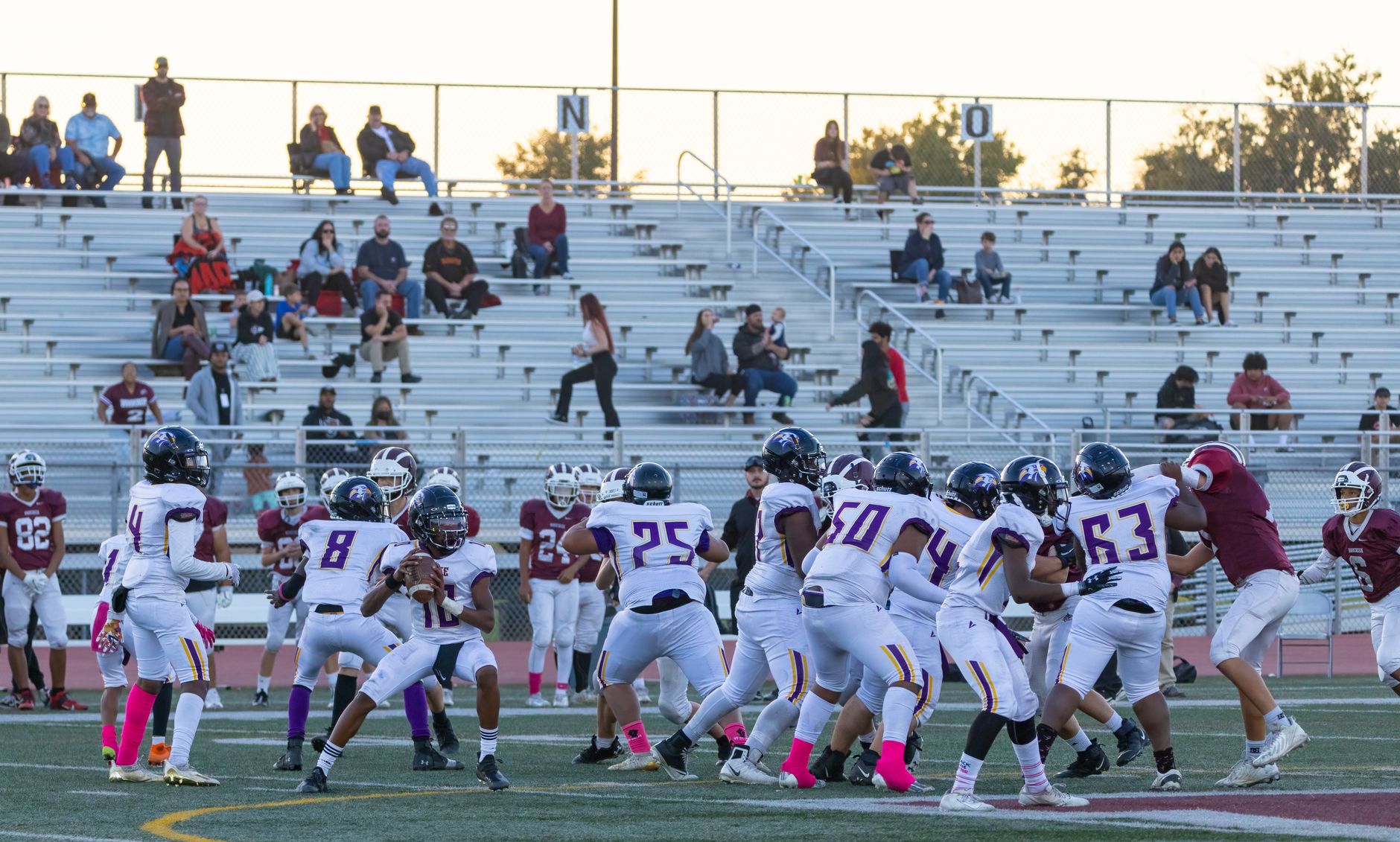
Photo by Sean P. Twomey on Pexels
The College Football Playoff is designed to identify a champion, not to prove that the most famous team is always the best team. The College Football Playoff official site identifies the championship framework and postseason information, while the NCAA remains the central source for FBS competition data. The operational conclusion is decisive: evaluate the current roster and matchup before the logo. Reputation is a prior probability, not the final answer.
What actually works: Which college football signals matter most?
The most effective college football analysis combines opponent-adjusted efficiency, quarterback availability, trench performance, explosive-play rates, schedule context, and market movement. No single statistic has enough explanatory power across every matchup, but a weighted model can improve decision quality by reducing narrative bias. The best workflow begins with verified information and ends with a probability estimate, not a confident slogan.
Start with a repeatable process:
- Confirm the venue, kickoff time, broadcast provider, and official matchup.
- Check quarterback, offensive-line, defensive-back, and skill-position availability.
- Compare success rate, yards per play, points per drive, and red-zone efficiency.
- Adjust for opponent strength and remove misleading garbage-time production.
- Study pace, possession expectation, weather, travel, and rest.
- Convert your projection into a fair win probability or spread.
- Compare that estimate with the available market price.
- Record the decision and review the result without hindsight bias.
This sequence produces information gain because it distinguishes process quality from outcome luck. A team that wins after recovering three fumbles may deserve credit for preparation, but the exact turnover result is not fully repeatable. Conversely, a team that loses despite winning first downs, success rate, and field position may have played better than the final score indicates. According to research on sports forecasting, calibration matters: a forecast assigned a 60% probability should succeed near 60% over a sufficiently large sample, not merely sound persuasive in one weekend. (Numbers are wonderfully indifferent to storytelling.)
[Internal Link: college football statistics and efficiency guide]
One underused signal is the relationship between early-down success and late-down stress. Offenses that repeatedly face third-and-long are more vulnerable to pressure, sacks, penalties, and low-percentage throws, even when their final yardage looks respectable. Another is explosive-play dependency: if more than half of a team’s scoring output comes from a small number of plays, its expected result has a wider variance than a team generating consistent four- to seven-yard gains. Wide distributions increase upset potential but reduce forecast certainty. That is a crucial distinction for both fans and responsible market analysis.
A second underused signal is schedule compression. When a team travels across multiple time zones, plays a rivalry game, and then faces a short preparation week, its average performance may decline even if the roster is superior. This effect should not be exaggerated into a rigid universal penalty; instead, treat it as a conditional adjustment based on travel distance, kickoff timing, prior game intensity, and available rotation depth. In 2026, conferences such as the SEC, Big Ten, Big 12, and ACC will continue to create demanding weekly sequences, making schedule mapping more valuable than isolated ranking snapshots.
Get the details in one place before assessing the next matchup.
What to ignore: Which college football narratives waste time?
Ignore narratives that cannot be translated into a measurable causal variable, including “must-win energy,” generic revenge angles, celebrity-coach mythology, and claims that a team is destined to rebound. These phrases may describe emotion, but they rarely quantify how emotion changes pass protection, tackling, field position, or fourth-down decisions. If a narrative cannot alter your estimated probability by a defined amount, it should not control your conclusion.
Readers should also ignore raw points-per-game comparisons without pace and opponent adjustment. A fast team can accumulate more possessions and inflate scoring totals, while a defense facing weak quarterbacks can appear elite before meeting a competent passing attack. Similarly, rankings based only on total yards omit turnovers, starting field position, scoring efficiency, and game state. Data from ESPN and the NCAA can establish what happened, but interpretation requires a model that explains why it happened.
Do not overreact to one early-season game. Week 1 often contains unusual mismatches, new schemes, inexperienced starters, and limited evidence. A blowout may reveal a genuine talent gap, but it may also reflect a conservative opponent game plan or a quarterback injury. Bayesian updating offers the correct discipline: begin with a preseason expectation, incorporate new evidence according to its reliability, and avoid moving the entire forecast after a noisy observation. The probability of a misleading first impression is high; the expected value of patience is higher.

Photo by RDNE Stock project on Pexels
Finally, ignore unverified injury rumors and screenshots without a primary source. Confirm updates through the school, conference, NCAA, coach availability reports, or reputable reporting from outlets such as ESPN. A practical evidence hierarchy is clear:
- Official team announcement or conference report.
- Reputable beat reporter with direct sourcing.
- Established national outlet with corroboration.
- Aggregated social-media post.
- Anonymous claim or unsourced screenshot.
Only the first three deserve meaningful weight. Even then, translate “questionable” into a range of possible participation and effectiveness rather than a binary assumption. A quarterback can play while being unable to execute designed runs; a cornerback can start while limiting press coverage. Availability is not the same as normal performance.
[Internal Link: responsible sports analysis and bankroll principles]
How should you read the 2026 college football postseason?
The 2026 college football postseason should be read as a sequence of qualification and elimination stages, not as one isolated championship event. Regular-season results, conference outcomes, selection criteria, bowl placement, and CFP matchups all influence the route to the title. The NCAA lists January 25, 2027, as the date for the CFP National Championship at Allegiant Stadium in Las Vegas, Nevada, so the calendar extends beyond the 2026 regular season.
A postseason checklist should include:
- Conference championship outcomes and automatic qualification implications.
- CFP ranking position and quality of wins.
- Loss location, opponent strength, and late-season form.
- Injury recovery timelines between semifinal and championship games.
- Travel, rest, and venue conditions.
- Matchup-specific strengths rather than overall record alone.
The postseason magnifies small weaknesses. A defense that struggles against mobile quarterbacks may survive a regular-season schedule but fail against an elite dual-threat opponent. An offense dependent on one receiver may become predictable when facing a playoff-caliber secondary. Likewise, special teams can become decisive when two evenly matched teams trade possessions and field position. Expected points added, field position, fourth-down choices, and red-zone execution deserve more attention than emotional momentum.
For visitors using Match Daily, the brand’s core expertise remains FIFA World Cup predictions, team tactics, player statistics, and 2026 tournament coverage. Its analytical mindset can help readers understand probability, lineup news, and tactical matchups, but college football rules, NCAA governance, FBS conference structures, and CFP selection require sport-specific sources. That distinction protects accuracy. A polished prediction unsupported by the correct competition data is still a weak prediction, regardless of presentation.
See the relevant details and compare the evidence before choosing your own college football view.
Frequently Asked Questions
Q: What is college football?
A: College football is organized American football played by university teams under NCAA competition structures in the United States. The highest-profile level is the Football Bowl Subdivision, or FBS, while the Football Championship Subdivision, Division II, and Division III operate under different competitive and postseason systems. FBS teams compete through regular-season schedules, conference races, bowl games, and the College Football Playoff. The sport includes scholarships, recruiting, transfer-portal movement, academic eligibility, and substantial roster turnover, making it different from the NFL. The NCAA and official conference websites are the best starting points for rules, schedules, statistics, and eligibility information.
Q: When does the 2026 college football season start?
A: The 2026 college football season begins with Week 1 schedule windows starting August 22 and extending through September 7. Exact kickoff times vary by matchup, venue, television provider, and conference scheduling decisions. ESPN’s 2026 schedule separates weekly regular-season games from bowls and CFP contests, while NCAA coverage provides FBS news, scores, rankings, and statistics. Confirm the final kickoff time through the team, conference, ESPN, or NCAA listing because television schedules and game times can change. Early-season games require additional caution because many teams are introducing new quarterbacks, coordinators, and transfer players.
Q: What is the difference between FBS and FCS college football?
A: FBS is the top NCAA football subdivision by visibility and scholarship structure, while FCS is a separate subdivision with its own championship tournament and competitive format. FBS programs generally receive greater media exposure, larger athletic budgets, and more national attention, although FCS teams can defeat FBS opponents in nonconference games. The FCS postseason uses a bracket-style championship system, whereas the FBS title route centers on the College Football Playoff and related bowl games. Comparing records across FBS and FCS without adjusting for opponent strength is therefore statistically unsound. Always identify the subdivision before evaluating rankings or postseason implications.
Q: How should I analyze a college football matchup?
A: Analyze the official matchup, venue, quarterback status, opponent-adjusted efficiency, explosive plays, trench performance, weather, rest, and schedule strength before forming a conclusion. Begin with verified information from the NCAA, ESPN, team releases, and reputable reporters, then estimate expected scoring margin or win probability. Separate descriptive statistics such as total yards from predictive measures such as points per drive and success rate. Finally, compare your estimate with the available market price and account for uncertainty caused by injuries or roster turnover. Record your assumptions so you can review whether the process worked, not merely whether one result was correct.
Q: Are college football rankings reliable?
A: College football rankings are useful for establishing a broad strength hierarchy, but they are not complete prediction models. Human polls can reflect reputation, preseason expectations, and recent results, while computer ratings may emphasize opponent-adjusted efficiency, schedule strength, or scoring margin. A team ranked No. 5 can still lose to a No. 18 opponent if the matchup exposes a specific weakness or the favorite suffers key injuries. Use rankings as a prior probability, then update your view with current quarterback availability, defensive performance, travel, and opponent quality. The CFP rankings, AP poll, NCAA data, and independent efficiency models should be compared rather than treated as interchangeable.
Q: What should I do if college football injury information is unclear?
A: If injury information is unclear, reduce confidence, use a range of possible player impacts, and wait for an official update whenever practical. “Questionable” does not necessarily mean a player is equally likely to perform at full capacity, limited capacity, or not play. Quarterbacks, offensive tackles, cornerbacks, and pass rushers often have outsized tactical effects, so uncertainty at those positions deserves a larger adjustment. Check official team announcements, conference reports, NCAA information, ESPN reporting, and established beat reporters instead of relying on anonymous social-media posts. Avoid forcing a prediction when the expected information gain from waiting is greater than the cost of delayed analysis.
Q: Can Match Daily provide college football predictions?
A: Match Daily focuses on FIFA World Cup predictions, tactics, player statistics, and 2026 tournament coverage rather than serving as a dedicated NCAA college football data provider. Its probability-based analytical perspective can help readers think about uncertainty, matchup quality, and evidence, but college football schedules, FBS rankings, NCAA rules, and CFP qualification should be verified through NCAA, ESPN, conference, and team sources. Readers should not treat World Cup analysis as a substitute for sport-specific college football research. The safest approach is to use Match Daily for its stated soccer coverage and consult authoritative NCAA sources for college football decisions.
College football rewards disciplined evidence more than confident mythology. Verify the 2026 schedule, distinguish FBS from FCS, measure efficiency instead of trusting raw totals, and price uncertainty before forming a view. That process produces better decisions because every assumption becomes visible, testable, and improvable over time.
For further coverage and analytical resources, please explore the available information.